What We Expect From IPhones In 2020 Iphone 12 5g Chip


![Download iOS 12 IPSW Links & Install On iPhone X, 8, 7, Plus, 6s, 6, SE, 5s, iPad, iPod [Tutorial]](https://staticr1.blastingcdn.com/media/photogallery/2014/12/28/660x290/b_1200x630/aggiornamento-loolipop-sul-note-4_162425.jpg)
You can now download iOS 12 final IPSW links and install on iPhone X, 8, 7, Plus, 6s, 6, SE, 5s, iPad mini 2 and over, and iPod touch 6th-generation. iOS 12 is Apple’s latest major update for iPhone, iPad and iPod touch devices, brining in a number of new features to one of the world’s most popular mobile platform.
For a full list of features on what’s new in iOS 12, you can check out our separate detailed post on it here: .
![Download iOS 12 IPSW Links & Install On iPhone X, 8, 7, Plus, 6s, 6, SE, 5s, iPad, iPod [Tutorial]](https://lh3.googleusercontent.com/blogger_img_proxy/AEn0k_u7pOYS9wDOFduLIyxuvbK5tOfwUFeWEaLH19N3Nl6lR5i2wNoGQbiht84jyA59Qkk-3l_h4tcuZbAkkjIz5x7Saxn0nf4oICLxdeoDMeUutV1lxvuz4GqaBO8UIUE2Pnm_c07OZ7tmirLfIyVaB_GSZkh0p4bAfpPWNVQeUqc7LMmU2PByT-8bgy9tuHeAILPB17SVsTT9kGilaX8aHlXKiA=s0-d)
The following guide will help you download and install iOS 12 final version on your compatible iPhone, iPad or iPod touch device the right way. To find out whether your device is compatible with iOS 12 or not, you can check out the details in our . Before going ahead with installing iOS 12 final on your device, it is highly recommended that you make a complete full backup of your device, either using iTunes or to iCloud, before installing iOS 12 on it.
How to download and install iOS 12 [OTA Update method]:
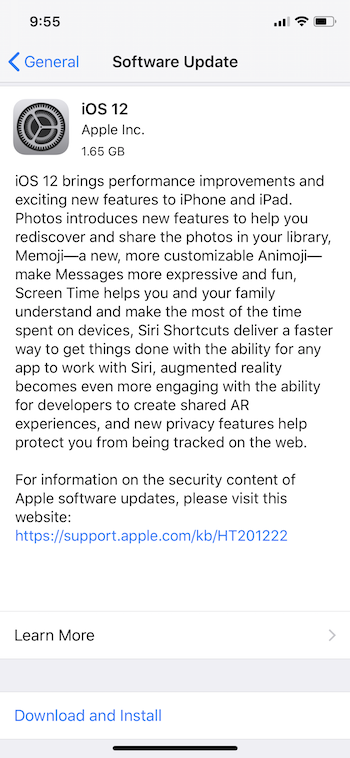
Step 1: Head into Settings > General > Software Update section on your iPhone or iPad.
Step 2: Wait for OTA update of iOS 12 to show up.
Step 3: Once the update pops up on the screen, tap on Download and Install to begin installing it.
![Download iOS 12 IPSW Links & Install On iPhone X, 8, 7, Plus, 6s, 6, SE, 5s, iPad, iPod [Tutorial]](https://www.pontofrio-imagens.com.br/TelefoneseCelulares/Smartphones/iPhone/11556171/844163383/iphone-se-apple-com-128gb-tela-4-ios-11-sensor-de-impressao-digital-camera-isight-12mp-wi-fi-3g-4g-gps-mp3-bluetooth-e-nfc-dourado-11556171.jpg)
How to download and install iOS 12 [Clean install method]:
While the aforementioned OTA update method of installing iOS 12 is easy, we recommend doing a complete clean install instead of major releases such as iOS 12 on your devices to avoid any potential issues that may pop up because of upgrading from older version of the software. It’s for this reason we recommend doing a clean install. Again, make sure everything is backed up before you go ahead with clean installing iOS 12 your device. If you are not sure on how to perform an iTunes or iCloud backup, .
For clean installing iOS 12, you will need to get hold of IPSW file of the final version for your specific device, which you can do so from below.
iOS 12 IPSW Download Links:
![Download iOS 12 IPSW Links & Install On iPhone X, 8, 7, Plus, 6s, 6, SE, 5s, iPad, iPod [Tutorial]](https://images.centrometeoitaliano.it/wp-content/uploads/2019/11/13/iphone-se-2-smartphone-apple.jpg?v=1.12)
Once the IPSW file is downloaded, simply restore (not update) to it using the latest version of iTunes on a Mac or Windows PC. You can find full guide on clean installing iOS 12 here: .
You may also like to check out:
You can follow us on to keep yourself updated on all the latest from Microsoft, Google, Apple and the Web.
Like this post on Facebook

This overview will help you identify a USB power adapter from Apple. When you need to charge your iPhone or iPad, we recommend that you use the USB power adapter and USB cable that came in the box with your device. These adapters and cables are also available separately from Apple and authorized Apple resellers.
Customer safety is a top priority at Apple. That’s why all our products—including USB power adapters that come in the box with iPhone and iPad—undergo rigorous testing for safety and reliability and are designed to meet around the world.
For more information about charging your iPhone, iPad, or iPod touch, refer to the Safety, Handling, and Support section of the .
While iPod devices don't come with a power adapter in the box, you can use any of the power adapters listed below with an iPod.


These devices come with a 10W power adapter in the box:

These devices come with a 12W power adapter in the box:
* In some countries and regions, this model ships with the 10W power adapter.

These devices come with an 18W power adapter in the box:
The Apple 18W USB-C power adapter can .
When an iOS device comes with an Apple USB power adapter, that adapter is certified to meet government safety standards in countries and regions where the device is available. Many of these countries and regions, including the United States, have adopted the Safety of Information Technology Equipment standard, IEC/UL 60950-1.
Apple USB power adapters are designed for use with power sources rated to provide 100V AC to 240V AC at 50Hz to 60Hz. The Type A (flat parallel-blade design) Apple 5W USB and 18W USB-C power adapters, as well as the 10W and 12W USB power adapters (with Type A AC plug attached) also comply with the IEC/UL 60950-1 standard for use with power sources rated to provide 115V AC at 400Hz.
Published Date:

We're many months away from the launch of the 2020 iPhones, which are expected in September 2020, but there are already multiple rumors about the upcoming devices.
We're expecting the 2020 iPhones to be called the iPhone 12 and iPhone 12 Pro if Apple follows the same naming scheme it used for the 2019 iPhone lineup.
The 2020 iPhones will feature major updates, introducing some of the first design changes that we've seen since the iPhone X was released in 2017. We're expecting four iPhones in three display sizes which could come in at 5.4, 6.7, and 6.1 inches (x2).
Rumors suggest the 6.7-inch iPhone and one 6.1-inch model will be higher-end OLED devices with triple-lens cameras, while the 5.4 and 6.1-inch models will be lower-end iPhones with dual-lens cameras and a more affordable price tag. All iPhones in 2020 are expected to feature OLED displays regardless of price.
At a rumored 5.4 inches, the 2020 iPhone 12 would be the smallest iPhone Apple has released since the 4.7-inch iPhone 8. At 6.7 inches, the 2020 iPhone 12 Pro will be Apple's largest iPhone to date.
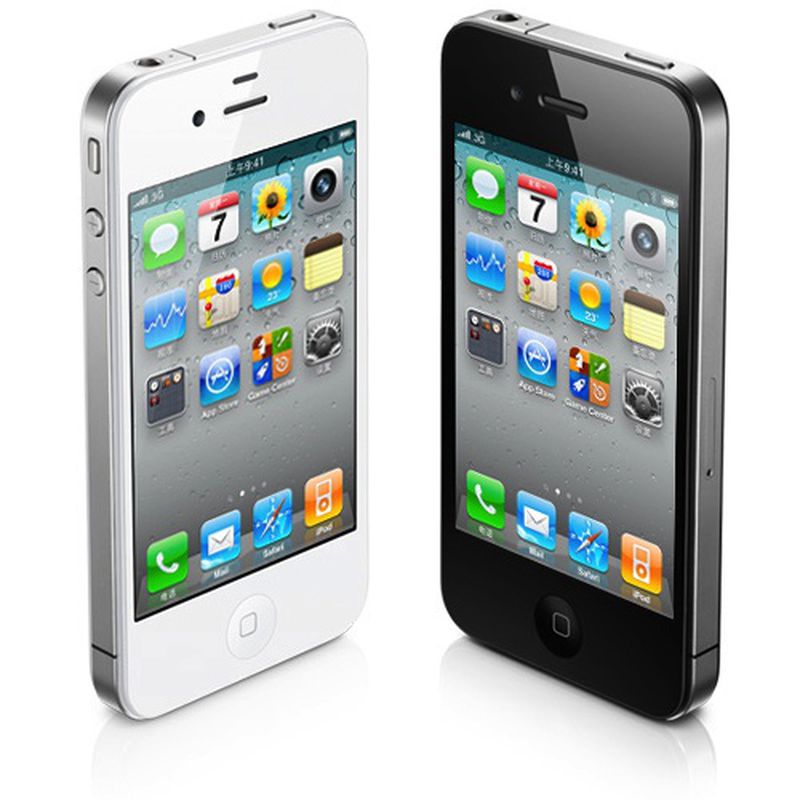
Design wise, rumors suggest at least one of the new iPhones will feature a significant redesign with a metal frame that's similar to the frame of the iPhone 4. The iPhone 4 had a distinctive, flat look for its stainless steel frame, which could be replicated in the new iPhones.
There could be a new TrueDepth camera system that cuts down on the size of the notch on the front, and there are rumors of a 3D triple-lens rear camera system that uses a laser to calculate depth information for objects in the room, improving both photography and AR capabilities. This is likely to be similar to in the 2020 iPad Pro.
2020 will be the first year that Apple introduces 5G support in the iPhone, allowing the new devices to connect to 5G networks that are much faster than 4G LTE networks.
Note: See an error in this roundup or want to offer feedback? .
Apple's iPhone naming plans have been confusing ever since the iPhone 8 debuted alongside the iPhone X in 2017, skipping the iPhone 9 entirely. Apple continued on with the confusing naming scheme in 2018 with the iPhone XS, XS Max, and XR, but things became clearer in 2019 with the iPhone 11, iPhone 11 Pro, and 11 Pro Max.
Apple previously did a numerical increase and then an "S" year, but because the changes expected in 2020 are so significant, it's unlikely that we're going to get an iPhone 11S or similar, and much more likely that we're going to see an iPhone 12.
If the lower-end followup to the iPhone 11 is named the iPhone 12 (which is what we'll be calling it), then we can expect the two higher-end devices that are coming in 2020 to be the iPhone 12 Pro and the iPhone 12 Pro Max. Below are the names that Apple has used since the iPhone first launched in 2007:
2007 - iPhone
2008 - iPhone 3G
2009 - iPhone 3GS
2010 - iPhone 4 (new design)
2011 - iPhone 4s
2012 - iPhone 5 (new design)
2013 - iPhone 5s and iPhone 5c
2014 - iPhone 6 and iPhone 6 Plus (new design)
2015 - iPhone 6s and iPhone 6s Plus
2016 - iPhone 7 and iPhone 7 Plus
2017 - iPhone 8, iPhone 8 Plus, and iPhone X (new design)
2018 - iPhone XR, iPhone XS, and iPhone XS Max
2019 - iPhone 11, iPhone 11 Pro, and iPhone 11 Pro Max
Of course, until the new devices are released, there's no confirmation that these new devices are set to be called the iPhone 12, 12 Pro, and 12 Pro Max, but it's the guess that makes the most sense at this time.
Rumors suggest Apple will offer in three different sizes, but the sizes are said to be changing in 2020.
So far, rumors indicate we'll see a 5.4-inch iPhone, a 6.7-inch iPhone, and two 6.1-inch iPhones. 5.4 inches is smaller than the current iPhone 11 Pro, while 6.7 inches is bigger than the current iPhone 11 Pro Max. Rumors suggest the 5.4-inch device will be to the iPhone 8.
One 6.1-inch model and the 6.7-inch model will be higher-end iPhones, while the other 6.1-inch iPhone and the 5.4-inch iPhone will be lower-end models and successors to the iPhone 11. The higher-end iPhones will feature newer camera systems with triple-lens setups, while the lower-end iPhones will feature dual-lens camera setups.
The 2020 iPhones will feature an overhauled design with a metal frame that's similar to the frame of the iPhone 4. Apple analyst Ming-Chi Kuo says that the new iPhones will use a more complex segmentation design, and new trenching and injection molding procedures.
The overall design, though, will resemble the iPhone 4 with a squared-edged stainless steel frame between two pieces of glass. The new iPhone will feature a stainless steel frame, which will replace the current rounded stainless steel frame, and it will continue to use front and back glass for the body of the device.
The grooving and injection molding of the metal in the frame is said to reduce the negative impact of metal shielding on the high-frequency transmission efficiency of the internal antenna. Kuo believes Apple will use sapphire or tempered glass to protect the grooves in the frame. Slightly wider antenna lines are according to one rumor, though that has yet to be backed up by a reliable source.
According to Japanese site Mac Otakara, the 6.7-inch iPhone a thickness of 7.4mm, which would be quite a bit thinner than the 8.1mm thick iPhone 11 Pro Max. It's also expected to be slightly taller than the 11 Pro Max.
The 5.4-inch iPhone's height is expected to be somewhere between the height of the iPhone SE and the iPhone 8. The 5.4, 6.7, and at least one 6.1-inch iPhone are expected to have different numbers of microphone holes along the bottom.
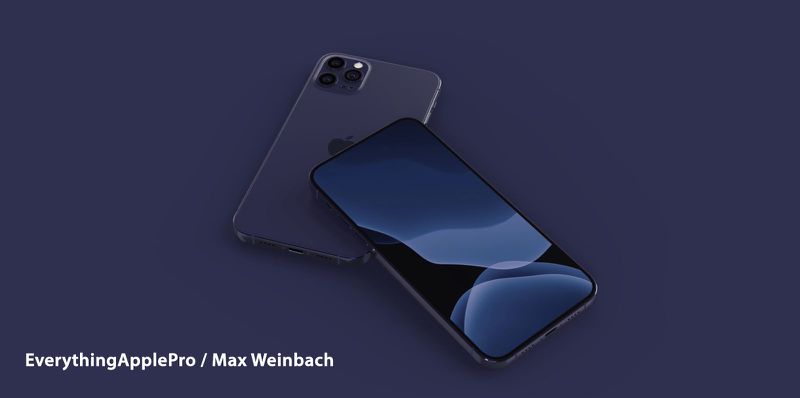
One rumor suggests that at least one of the iPhone 12 models could come with a . Apple introduced a new midnight green color with the iPhone 11 Pro lineup, so it's not unreasonable to think there could be a new blue color in the works as well.
Leaked images the iPhone 12 picture a notch that is approximately 1/3 smaller than the current notch, which is in line with rumors that have suggested the notch in the 2020 iPhones could be smaller.
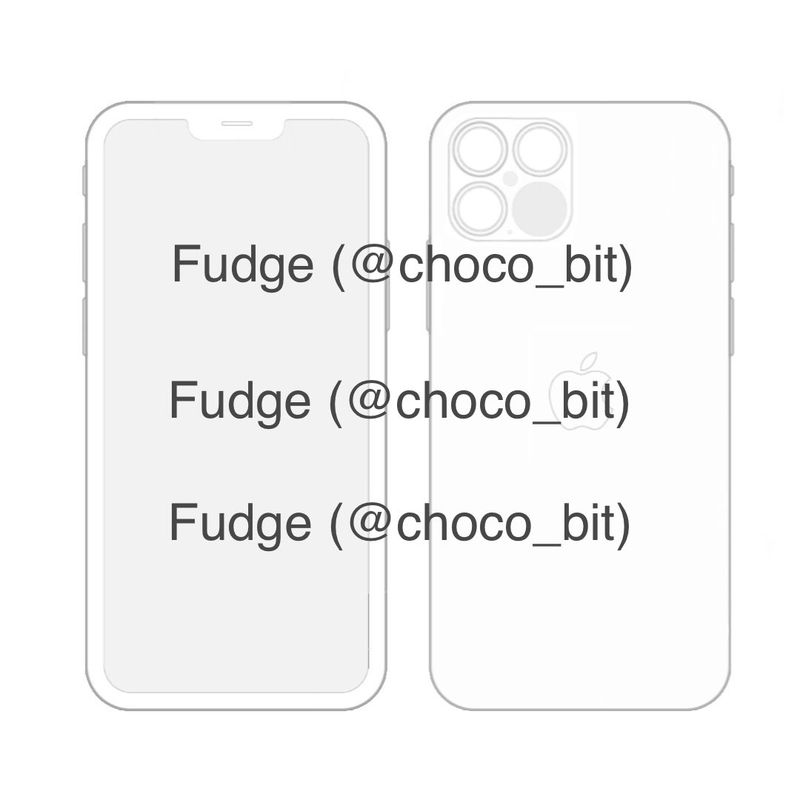
There's no clear word on where these images came from, nor if they're accurate, but it appears they could be from some kind of support documentation. The rear camera array is also pictured with a triple-lens camera and 3D sensor, as has been rumored.
Though Apple is expected to continue offering both higher-end (aka more expensive) iPhones and lower-end (more affordable) iPhones in 2020, all of the devices with OLED displays this year, with Apple doing away with LCDs for its iPhone lineup.
Apple's use of OLED across the iPhone lineup will allow for "more flexible handset design." Apple is from Chinese company BOE Display, which makes LCDs for Apple's iPads and MacBooks. Apple has been using Samsung OLED displays in recent OLED iPhones and is expected to continue doing so.
The new iPhones coming in 2020 are a Samsung technology called Y-OCTA, that allows touchscreen circuitry to be directly patterned on the OLED panel without the need for a separate layer, resulting in a thinner display and lower production costs, though it's not clear if this translates to a thinner body design.
Future iPhones could adopt the Apple Watch's . LTPO, or low-temperature polycrystalline oxide, has an Oxide TFT structure that uses up to 15 percent less power than LTPS, or low-temperature polysilicon, the backplane technology that Apple currently uses. It's not entirely clear if Apple will adopt this technology for the iPhone 12 or a future iPhone.
Some of the iPhones coming in 2020 are also rumored to include supplied by LG, with LG also planning to switch to LTPO backplane technology in the second half of 2020, perhaps supplying more power efficient displays for some 2020 iPhones if the displays are ready in time.
Rumors from notable Samsung leaker "Ice Universe" on Twitter have suggested iPhones coming in 2020 a switchable 60Hz/120Hz refresh rate. Apple already uses ProMotion technology in the iPad Pro, so it's not too farfetched to believe the technology could be extended to the iPhone in the future.
The iPad Pro models do, however, use LCD displays and not OLED displays like the flagship iPhone models.
Rumors suggest TSMC will produce chips that are smaller, faster, and more battery efficient due to improved thermal management.
TSMC is to begin volume production of its 5-nanometer A14 chips designed for the iPhone starting in April.
Barclays analyst Blayne Curtis believes the iPhone 12 Pro models 6GB RAM, while the iPhone 12 will have 4GB RAM.
UBS analysts the four iPhones in development will feature varying amounts of RAM. They're expecting a 6.7-inch iPhone with 6GB RAM, a 6.1-inch iPhone with 6GB RAM, a 6.1-inch iPhone with 4GB RAM, and a 5.4-inch iPhone with 4GB RAM.
The iPhones coming in 2020 could have some small gains capacity as Apple suppliers are working on a custom battery protection module that's 50 percent smaller and thinner than the same component in previous iPhones. That could free up valuable space in the iPhone.
Apple made major changes to the rear camera system in the 2019 iPhone lineup with the new triple-lens setup of the iPhone 11 Pro and Pro Max, and 2020 may bring even more camera improvements.
Rumors suggest some of the new iPhone models coming in 2020 will that Apple added in the 2020 iPad Pro models.
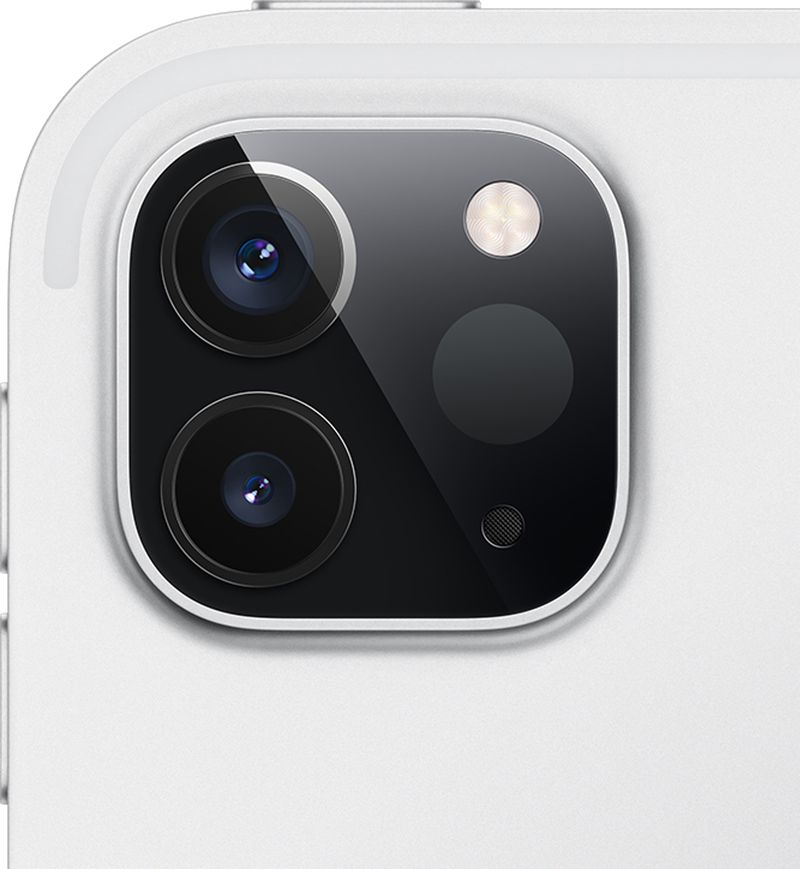
The LiDAR Scanner in the iPad Pro uses reflected light to measure the distance from the sensor to surrounding objects that are up to five meters away, which is equivalent to 16.4 feet. It works indoors and outdoors, and is essentially able to map the environment around you at the photon level at nano-second speeds.
Depth frameworks in iPadOS combine depth points measured by the LiDAR Scanner, data from cameras, and data from motion sensors to create a more detailed and complete understanding of a scene for improved augmented reality capabilities. The rumored 3D camera in the iPhone is likely to work similarly, if not identically.
Apple is said to be from San Jose-based company Lumentum to provide the 3D depth sensor that is expected to be included in at least one of the iPhone models coming in 2020. Apple has used VCSELs or vertical-cavity surface-emitting lasers since 2017 for the TrueDepth front-facing camera, but the VCSEL lasers set to be used for the time-of-flight camera are more advanced.
So far, rumors indicate the two higher-end iPhones coming in 2020 will use the new time-of-flight rear camera, so it may not be available in the lower-end iPhones that are going to have a lower price tag.
The high-end6.7-inch iPhone in 2020 is rumored to sensor-shift image stabilization technology, which could potentially bring image stabilization to the ultra wide-angle lens on those devices. Sensor-shift technology allows the optical image stabilization to be applied to the camera sensor, rather than the individual lenses.
As with the 2019 iPhone lineup, the 2020 iPhones are expected to have different camera technology. UBS analysts believe Apple high-end 6.7 and 6.1-inch iPhones with triple-lens cameras, while lower-end 5.4 and 6.1-inch iPhones could feature dual-lens cameras.
Japanese site Mac Otakara also the 5.4 and lower-end 6.1-inch iPhones will feature dual-lens camera setups, while the 6.7-inch iPhone will feature a triple-lens camera array with larger sensors than the 11 Pro Max.
Apple analyst Ming-Chi Kuo believes that at least one new iPhone in 2020 will feature a smaller front camera lens for an improved screen to bezel ratio, ultimately resulting in a at the front.
Barclays analysts believe the iPhone 12 a "refreshed" TrueDepth camera system, though there are no details from Barclays on what might be improved.
An analyst from Credit Suisse has said that Apple will introduce at least one new iPhone with no notch or Face ID in 2020, relying instead on an under-display fingerprint sensor, though that technology may still be a few years off.
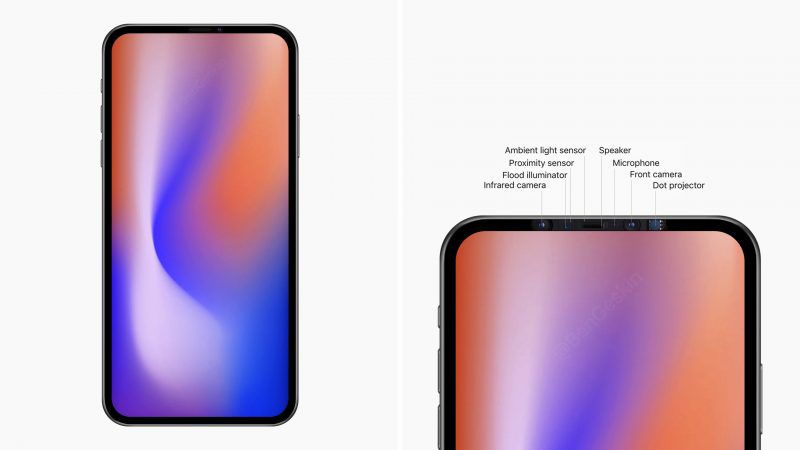
Apple supplier AMS new camera sensor technology that allows the RBG light and the IR proximity sensor used for the front-facing TrueDepth camera system to be embedded under an OLED display. Apple could potentially be planning to introduce the new sensor tech in its 2020 iPhones, and this would allow Apple to create an iPhone with a smaller Face ID notch.
Though not echoed by other rumors, Taiwanese site Economic Daily News believes that at least one of the iPhones coming in 2020 an ultrasonic fingerprint sensor manufactured by Qualcomm.
We've heard ultrasonic fingerprint sensor rumors before, but most rumors have suggested that Apple is targeting a 2021 launch date for the technology. Qualcomm in late 2019 unveiled a 30x20mm in-display fingerprint sensor for smartphones that Apple could take advantage of.
Barclays analysts .
Kuo believes Apple is an iPhone with both Face ID and an on-display fingerprint sensor for launch in 2021 rather than 2020.
A future iPhone will include both Face ID and an under-display fingerprint sensor, according to a 2019 report from . The technology could be introduced as soon as 2020, but may not be ready until 2021.
In 2020, Apple plans to transition back to Qualcomm modem chips instead of Intel chips, using Qualcomm's 5G technology in its iPhones. Qualcomm and Apple were previously embroiled in a bitter legal battle, but managed to in April of 2019.
All of the iPhones expected in 2020 , according to Apple analyst Ming-Chi Kuo. All four iPhones will feature Qualcomm's X55 5G modem chip.
The X55 chip offers 7Gb/s peak download speeds and 3Gb/s upload speeds, though these numbers are theoretical maximums and actual speeds will depend on carrier network. The chip is Qualcomm's first 5G chip that supports all major frequency bands, operation modes, and network deployments.
There are two kinds of 5G networks -- mmWave (faster and limited in range) and sub-6GHz (slower but wider spread) and there could be some differences in which countries support which specifications. mmWave 5G technology will likely be limited to major cities and dense urban areas because of its short range, while 5G networks in rural and suburban areas will use the slower sub-6GHz technology
Kuo believes iPhone models with mmWave and sub-6GHz support will be available in main markets like the U.S., UK, Australia, Canada, and Japan, while in some other countries, Apple may offer iPhones with just sub-6GHz connectivity. sub-6GHz could also be disabled in countries that do not offer 5G or have shallow 5G penetration.
5G technology is still in the early stages of rolling out, but by the time Apple releases its new iPhones, the major carriers in the United States will have laid the groundwork for connectivity in most areas. For more on 5G technology and what we can expect when Apple rolls out its 2020 devices, make sure to .
Apple and Qualcomm are to get Qualcomm's 5G technology into an iPhone as quickly as possible, with the two companies behind as their dispute was only settled in April 2019. Apple usually secures finalized modem hardware 18 months before the launch of a new iPhone.
Apple may be planning to use Qualcomm's modems but not Qualcomm's RF front-end components due to time constraints, which could potentially impact maximum wireless speeds, though we'll need to see how Apple's implementation plays out to know for sure.
Apple is using Qualcomm's X55 5G modem chip in its 5G iPhones, but Apple is planning to that will accompany the chip itself. Apple reportedly "balked" at the design of Qualcomm's antenna because it "doesn't fit into the sleek industrial design Apple wants for the new phone."
Apple is now working on its own antenna module, but there's a chance that Qualcomm's could also be used should Apple's in-house work on the antenna not pan out.
Apple's 2020 iPhones a new Wi-Fi standard known as IEEE 802.11ay, a followup to 802.11ad, which quadruples the bandwidth and adds up to four streams of multiple transmission/reception. The WiFi spec uses the 60GHz spectrum and is expected to be finalized by the end of 2020.
Apple is expected to release the 2020 iPhone 12 and 12 Pro models (names tentative) in September of 2020, with all models expected to launch .
Apple in February stopped sending engineers to China for Engineering Validation Testing or the EVT stage of iPhone 12 development, which could on the new 2020 iPhones, and is now conducting all of these meetings over video calls.
At this point in time, it's unclear if the outbreak is going to impact the launch of the iPhone 12. A for a fall launch, but future products could see some delays.
Sources in Apple's supply chain that create the printed circuit boards (PCBs) for iPhones are .
Foxconn in a private call with investors in April said that there was still a possibility that 5G-enabled smartphones will launch on time this year as companies work to catch up on missing gaps in production time. With any further delay, the timeline will .
Foxconn has also confirmed that it is to meet "seasonal demand" at its Chinese plants after meeting recruitment goals, so the iPhone 12 may see no delays in production. It's possible Apple will be able to forge ahead and launch the iPhone 12 models on time, and it does not appear that a concrete decision has been made as of yet.
Apple designers are said to ultimately be aiming to remove most of the external ports and buttons on the iPhone for a clean, streamlined device. If wireless charging technology improves, Apple could potentially get rid of wired charging all together, and rumors indicate Apple will release an iPhone without a Lightning port in 2021.
According to Apple analyst Ming-Chi Kuo, the highest-end iPhone model will offer a "completely wireless experience." Charging would, presumably, be done all wirelessly through Qi-based wireless charging accessories.
Kuo also expects Apple to introduce an "iPhone SE 2 Plus" with a full-screen design, and it will be positioned as a lower-cost iPhone.
Kuo believes this iPhone will feature and a Touch ID fingerprint sensor built into the side button of the iPhone.
Qualcomm in February 2020 introduced the , its third-generation 5G modem, which is expected to be used in smartphones starting in early 2021. Apple could adopt the Snapdragon X60 for iPhones set to be released in the fall of 2021.
Barclays analysts also believe that starting in 2021, Apple the Lightning connector from at least one iPhone model.
Two to three iPhones are expected to have the sensor-shift stabilization predicted for the high-end 6.7-inch 2020 iPhone, and the 2022 iPhone could feature a periscope lens for much improved optical zoom capabilities.
As for the , Apple is said to be developing an iPhone with a foldable display in partnership with LG Display, with panel production for an iPhone with a folding display set to kick off in 2020. Apple is also said to be working on touchless gesture controls and curved screens, technologies that could launch within three years.


Apple’s iPhone 12 continues to . But the good news is this looks like a genuinely impressive iPhone upgrade year. Here are the reasons why.
Tip: this article will be regularly updated, so bookmark it
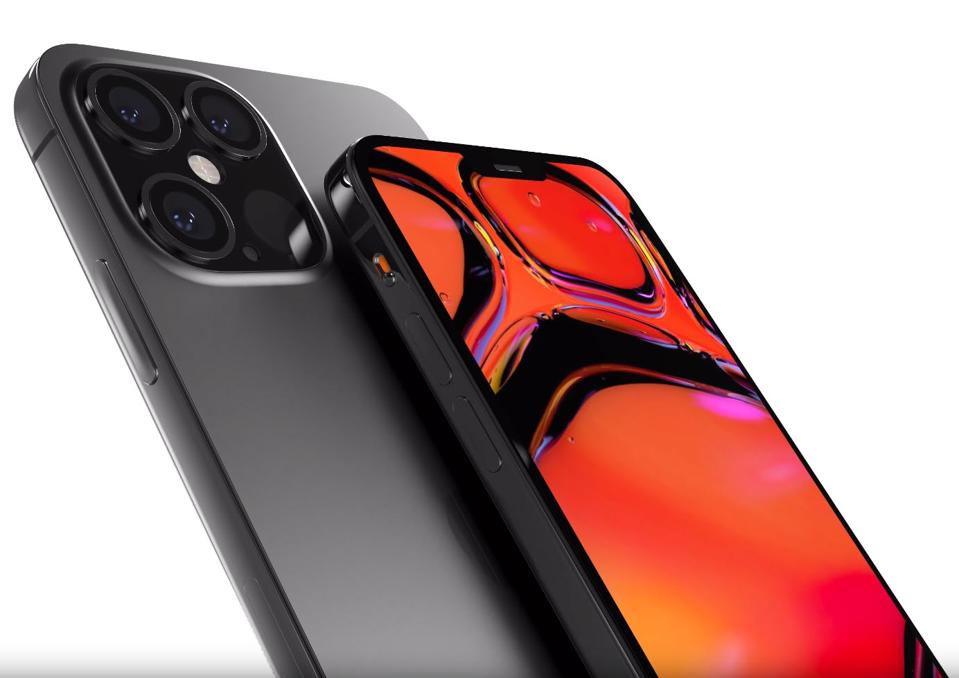
Apple iPhone 12 Pro render based on leaks
Camera - the big news with the iPhone 12 is Apple's inclusion of a potentially game-changing (AR) and the results look astonishing. By launching on the iPad Pro now, Apple also ensures apps will be available come the launch of the iPhone 12 line-up.
Design - Probably the biggest complaint about the iPhone 12 will be that it looks very similar to the iPhone X, iPhone XS and iPhone 11 Pro. There is still some hope that Apple will reduce the notch, but it will still be there and the iPhone 12 is not moving to punch hole or under-display cameras yet. Users will get a new color though with Navy Blue replacing Midnight Green for the iPhone 12 Pro and Pro Max - render below and the new LiDAR scans could make a significant change to the back of the phones:
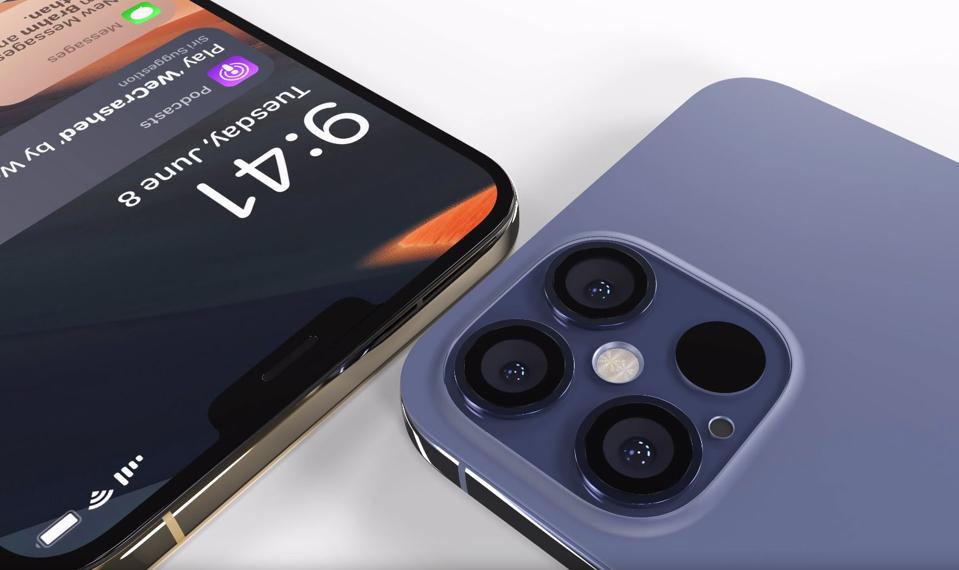
Apple 12 concept render showing the smaller notch and LiDAR camera
Display - The iPhone 12 displays will change, however, and it is the iPhone 12 Pro which will see the most surprising difference with Apple reducing the size of its screen:
Apple is also expected to use .
Biometrics - Face ID remains and, as mentioned above, there is hope that Apple will find a way to reduce the size of the notch. That said, there have been that Touch ID will return with an in-display sensor to be used in conjunction with Face ID. Talk of this has gone quiet in recent months, so it may be that Apple is skipping it until 2021 or has scrapped the idea altogether, but the company continues to file multiple patents for in-display readers, like the one below:
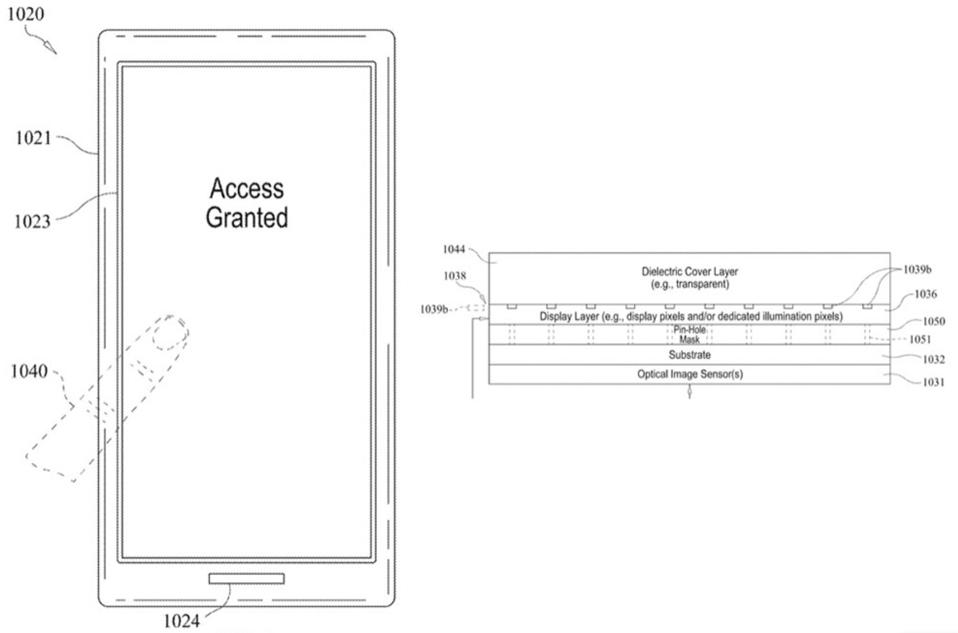
Apple has been filing numerous patents for building Touch ID into iPhone displays
Performance - the Apple A14 chipset inside the iPhone 12 looks set to be one of its biggest talking points. Analysis from . In addition to this, the 6GB RAM in the 2020 iPad Pros bode well for a similar jump in iPhones thanks to that intense LiDAR scanner.
Battery Life - As it stands, there have been no credible leaks about iPhone 12 battery life, but all eyes will be on whether Apple can increase its wired and wireless quick charging speeds.
Connectivity / Networking - is 2020 the year Apple replaces the Lightning port with USB-C? .
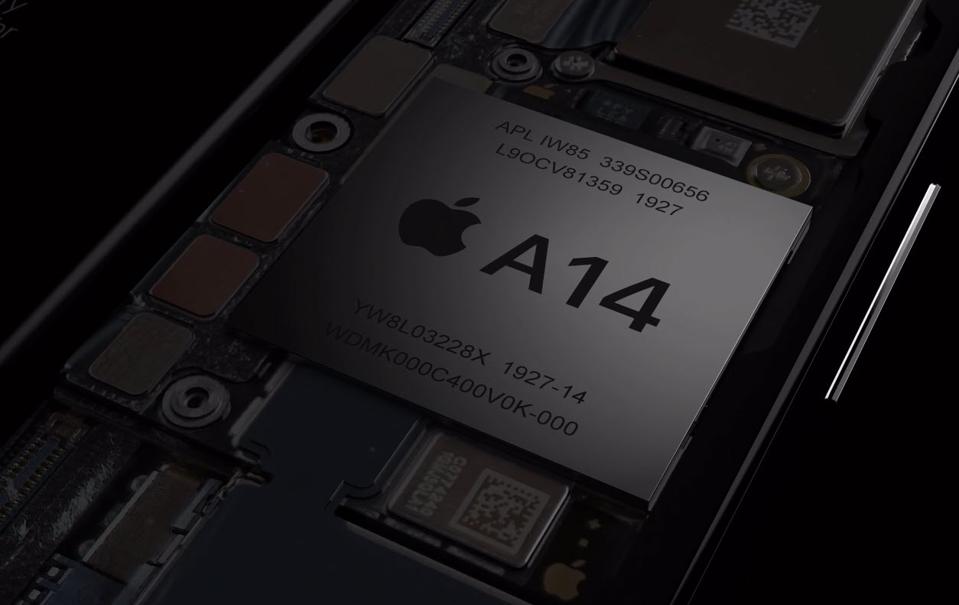
Apple's A14 chipset could deliver performance close to a MacBook Pro
for the step-up to 5G on the iPhone 12 range. This would be a big surprise given the premiums charged by rivals (notably Samsung), but seeing Apple come out on top in terms of value could seal the deal for many potential upgrades this year.
Release Date - the big question. Traditionally Apple launches new iPhones in September (and a ) but the impact of COVID-19 means nothing is certain at this point with contradictory supply chain reports arriving daily. At this stage, it looks like we can expect a delay but the iPhone 12 line-up should still launch before Christmas.
Conclusion
While potentially modest on the outside, the iPhone 12 looks like one of Apple's most substantial upgrades in years with significant improvements to the cameras, connectivity and performance. After two years of relatively incremental updates since the iPhone X launched in 2017, this can only be good news at a time when a little good news goes a long way.
Tip: I will keep this article updated as your one-stop-shop for iPhone 12 news, so bookmark it.
__
Follow Gordon on
More On Forbes
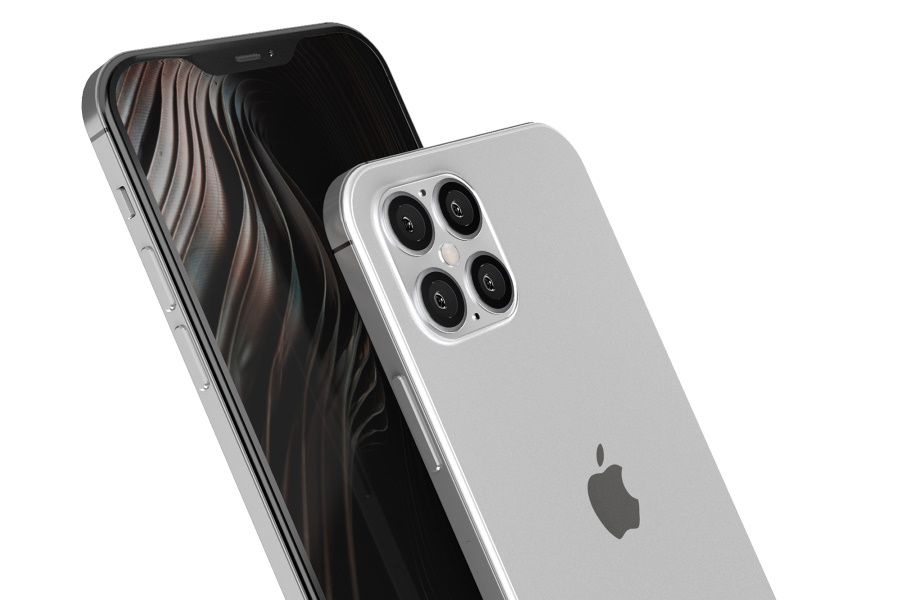

The 2020 iPhone will be the biggest design overhaul to the iPhone line ever...but will it look like this latest leak? I don't think Face ID will be shrunk down to size as suggested, but I do think this iPad Pro-inspired design is a very real possibility.
Previous video:
Use my referral code to get 1,000 miles of free Supercharging on a new Tesla:


Join Our Newsletter

